
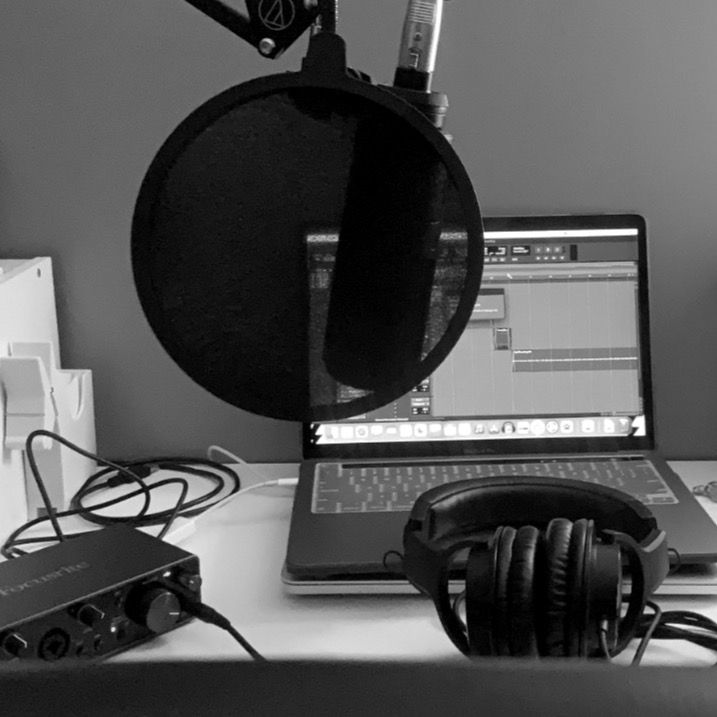
*Cue the soothing podcast voice*
Have you ever wondered what it would be like to have your own podcast?
Sure, we’ve all joked around with our friends about how we could make a podcast that would be full of laughter, jokes, and anything else we goofily thought up. But there’s a lot more to the podcast picture than just laughing and having a good time with your buddies.
Creating a podcast is not a simple walk in the park. It’s more like a jog up a mountain. It’s intriguing and daunting before your start, but once you begin your journey, you realize just how much you’ve taken on. You’ll have to stop and take breaks, sometimes only moving a few steps forward, and you might also experience some obstacles to overcome. But you will eventually make it to the top, the finish line where you can think of another different journey to begin.
In other words, podcasting is a joyful, sometimes stressful journey. But it’s definitely worth it. If you are interested even the slightest bit by making a podcast, here’s a short crash course into becoming an (amateur) podcaster.
1: Brainstorm Ideas and Find Your Niche
Every creation starts with some form of an idea. Whether that is a well-thought-out idea or a random blur, everything begins with a thought. First, brainstorm a list of ideas of what you want to talk about in your podcast. Having a general idea of the topics you want your podcast to cover will help you find your niche in the podcast world. You don’t want to talk about the same topics as another podcast. You want to have the individuality that sets you apart from other podcasts.
2: Know Your Audience

My college professors always stated figuring out your audience is one of the first things you should do when creating. And as a podcaster, your audience is essential. Once you start brainstorming topics you want to discuss, think about what type of audience you want to have. You want your podcast to pique people’s interests so they’ll want to listen to you. It’s helpful to ask yourself: Why should people listen to my podcast?
Thinking of a motive can help establish the specific audience you want. Because when you market your podcast, you want to advertise it to your intended audience so you keep getting the right kind of listeners.
If you’re feeling stuck, do some research on what type of podcasts are already out there. Checking out the competition is a great way to figure out what you want to do with your podcast. You don’t want to do what someone else is doing, but choosing the right audience is critical for your podcast to be a success.
3: Find Affordable Recording Equipment That Won’t Break the Bank
Did you know you can record a podcast using an iPhone? That’s how I first started my experience with podcasts. I used the voice memo app on my phone and recorded all of my audio that way. Hey, it was a start and as a college student, it was the easiest route for me to choose (I wouldn’t recommend recording on your phone, but if it’s the only way you can get your audio, you can still get a decent quality recording with your phone).
You can go online and order a podcasting kit or new fancy audio equipment that might cost you an arm and a leg, but all you really need is a microphone and a platform to record your audio. You don’t have to spend hundreds of dollars when there are more affordable places to find your recording equipment, like resell shops or music stores with used equipment. It’s okay if you don’t have the fancy recording equipment with all the bells and whistles. If you have a microphone and a recording platform, that’s all you need to start your podcast.
4: Set Up Your Own Studio
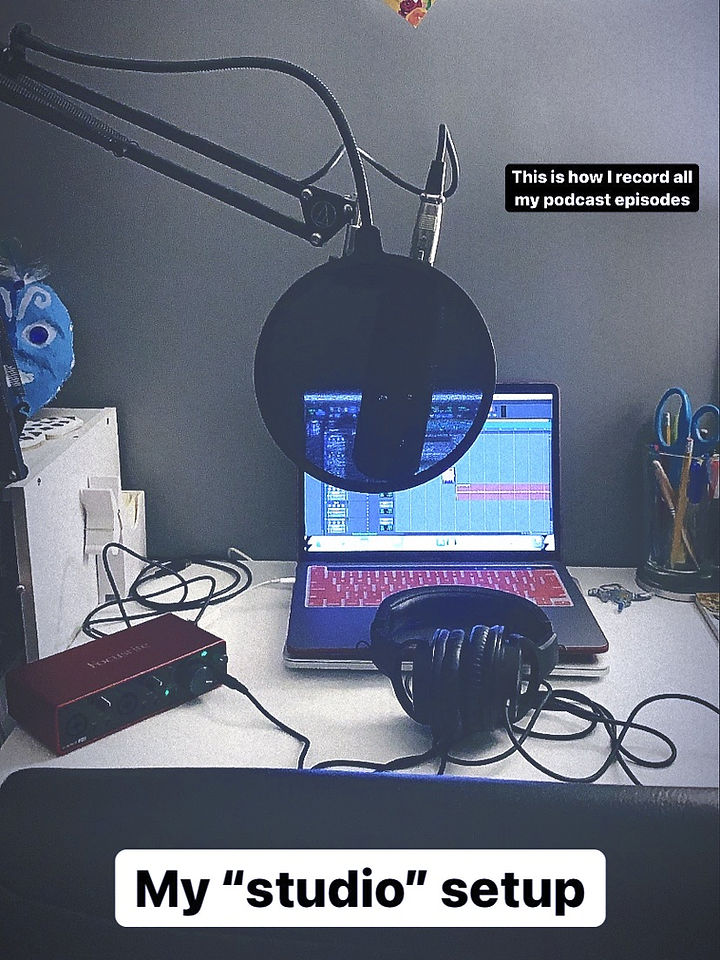
Besides a microphone and a recording platform, the only other basic necessity you need is a place to record your podcast. The recording environment is pretty critical because you cannot achieve a clear recording unless you have a (decently) soundproof environment. A closet is one of the best places to record. I should know. My first podcast experience was me sitting in my closet for a half-hour recording my audio files. If you don’t have enough closet space, you can record in a smaller room with furniture. Honestly, you can make any room into a studio if you have the materials.
When scoping out a room to record in, it’s essential to keep in mind that you need a smaller room that doesn’t have as many uncovered flat surfaces. You want to record in a place that can absorb sound. If you can, hang up blankets over the doors, close air vents, place pillows in front of the door cracks and lay a blanket or towel down on top of larger flat surfaces.
Soundproofing the room is essential because you don’t want any echoing or other noises bouncing off the flat surfaces. Having softer materials throughout the room will help absorb the sounds you will be recording. It’s a lot easier to record in a space that is quiet and void of outside noises so you don’t have to edit out the background noises later. Because trying to edit out the unnecessary background noises can be an extra pain in the butt, it’s helpful to be steadfast when soundproofing your recording area.
If you do want to spend some extra money or are more concerned with your audio quality, there are isolation booths you can buy that will guarantee you get the best possible sound. If you want to make your own isolation booth, you can build one with a tower of pillows. All in all, there are so many different ways you can make your recording studio. Find which ways work best for you and give you the best sound.
5: Make a General Episode Outline
Every podcaster will create differently, but it’s a good idea to outline what you’d like to talk about in your podcast. You don’t want to go into this blind-sighted with no preconceived notions. If you have an intro and outro (which you should always have), write it out word for word and keep it consistent throughout each episode. It’s the only part crucial to be written word for word. For your episode topics, jot down a few bullet points so you stay on track, but don’t write out every single thing you want to say. Unless you’re recording a fictional story episode, keep the vibes feeling conversational and friendly. You don’t want the listener to feel like you’re reading off a script, especially if the podcast tone is conversational.
You don’t have to write every single thing out in your podcast. Just keep it simple and give yourself some leeway. It’s helpful to have an idea of topics or points you’d want to talk about so you don’t ramble and go way off topic, but it’s also okay to give yourself creative freedom. Don’t be so tied down to speaking word for word. Speak from the heart and go with the flow. It’s more interesting to listen to a podcast that sounds like a conversation rather than a monotone read-along.
6: Audio Editing is Tedious and a Learning Curve
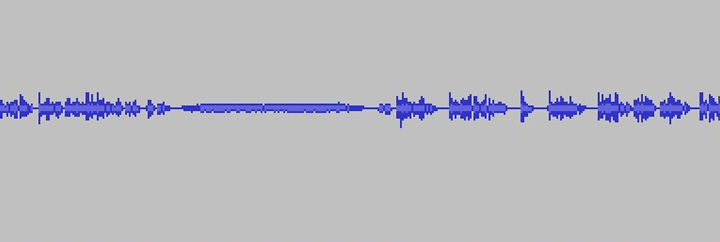
If you’ve never edited audio before, you’re in for a bit of a learning curve. The most tedious part of creating a podcast is the editing. It’s the part that takes the most time and effort. It’s easy sitting down talking into a microphone, but it’s not so easy learning how to edit your recordings. Don’t worry, you will get the hang of audio editing. It just might take you a little bit longer to learn the ropes.
A quick Google search can provide you with free audio editing platforms (online websites and applications) that you can use. Audacity is probably one of the most well-known audio editing apps (I learned about Audacity in middle school) that you’d know. It’s a free app that you can download and edit your audio files. There are other free apps like Garage Band and Ocean Audio you can also use. If you want a paid version, Pro Tools, Adobe Audition, and Logic Pro X are some of the best paid audio editing software out there.
Editing audio is a process you might not understand right away. You’re learning a brand new skill, so it’ll take some time and patience to get acquainted with the technical production side of podcasting. You’ll probably get frustrated sometimes and have to rest your eyes from staring at the computer screen, but it’s all worth it when you listen to your finalized mix. Audio editing can take a few days (at least) to complete, so make sure you set enough time aside to work on it.
7: Have Fun and Get Creative
Podcasts are a great way to use your creativity differently. There are so many options you have when making a podcast. You can (pretty much) make it about anything you want. There are podcasts on knitting, arts and crafts, dating advice, crime stories, and astrology. There are also news podcasts, celebrity interviews, sports talks, and cooking shows. In podcasting, nothing is off-limits for what you can do. So make your podcast a fun experience to create and listen to. You want this podcast journey to be one you can enjoy and have fun with.
Step outside your comfort zone and try something new. Or fulfill a lifelong dream you have. Whatever you want your podcast to be, keep using your creativity and have fun with the process. Cause why work hard and spend time and energy on something that doesn’t make you happy?
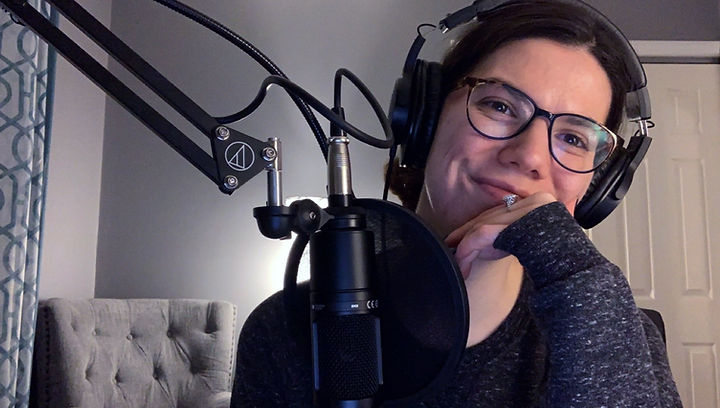
Well, there you have it. I hope you’ve learned from this quick crash course in starting up a podcast. It’s not sunshine and rainbows all the time. It’s not always fun and games. But if you love what you’re doing, it won’t feel much like work. The podcast journey will be stressful at times, and you may hate your episode and have to re-record the entire thing. But it all comes with the journey of creating. Be excited about this new experience and have fun! Get creative and don’t give up. You can overcome the obstacles and get through whatever funk you might get in during the process. It’s all worth it when you finish your podcast episodes and publish them for the world to hear. Completing your first podcast season will feel like a huge accomplishment, and it is! You should be proud of yourself.
If you don’t get as many listeners as you wanted to at first, don’t worry. With time and more experience, you will grow your following. You won’t become the best podcaster overnight (I hate to break it to you). It takes time and patience to find your footing. You learn a lot as you go through the process. I only got two hundred listens after my ten episodes of season one. For someone who never worked on podcasts before, that’s a pretty good achievement in itself. So don’t worry about the numbers yet. Just have fun and go at your own pace.
Hey, don’t forget that we all have to start somewhere!
If you want to check out my podcast, Love. R, season one is available on Spotify and Apple Podcasts. Or if you don’t want to check it out, I guess that’s cool too.
Good luck with your podcast!
Written in March 2022
 Maria's Muses